
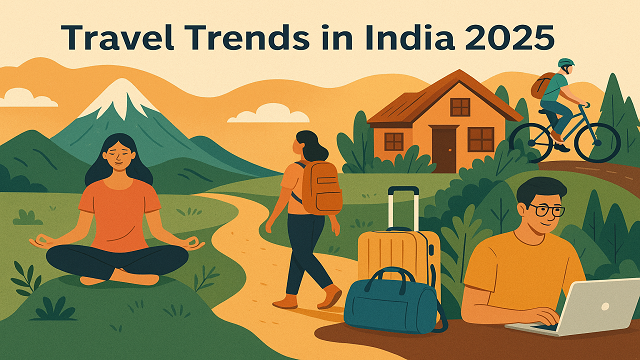
Travel in 2025: A Cultural Shift
The way Indians travel in 2025 looks very different from the pre-pandemic years. Travel is no longer only about luxury vacations or sightseeing; it has become a lifestyle choice that reflects personal values, work culture, and global awareness. From eco-conscious adventures to budget-friendly getaways and extended “workations,” India’s travel patterns are evolving rapidly.
Domestic tourism has surged as Indians explore hidden gems across the country, while international travel continues to grow with an eye on unique experiences. Sustainability, affordability, and flexibility are at the heart of this shift.
Sustainable Tourism Becomes Mainstream
One of the biggest changes in 2025 is the rise of sustainable tourism. Travelers are increasingly aware of the impact their journeys have on the environment. Instead of lavish, resource-heavy vacations, people are opting for eco-friendly resorts, community-based stays, and experiences that support local economies.
Eco-resorts in Goa, Kerala, and the Himalayas are booming, offering solar-powered accommodations and farm-to-table dining. Trekking tours now emphasize “leave no trace” practices, while adventure operators promote responsible wildlife tourism.
Even international travelers are factoring in sustainability. Indians choosing Europe or Southeast Asia are more likely to book carbon-neutral flights, eco-certified hotels, and itineraries that include cultural immersion rather than over-commercialized attractions.
Budget Travel Redefines Vacations
Budget travel in 2025 is not about cutting corners but about smart choices. With inflation and rising costs, Indians are planning trips that deliver value without compromising experience.
Low-cost airlines, homestays, and shared accommodations are in high demand. Platforms offering group discounts or subscription-based travel passes are gaining popularity. Night buses, budget trains, and intercity EV rentals are fueling affordable domestic exploration.
Backpacking culture, once associated mostly with international travelers, has become common among Indian youth. College students and young professionals are exploring Ladakh, Meghalaya, and coastal Karnataka on limited budgets, documenting their journeys online and inspiring more people to embrace cost-effective travel.
Workations: Blending Work and Leisure
Work-from-anywhere culture is one of the defining travel trends of 2025. Professionals are no longer tied to offices, and many are taking advantage of hybrid work models to explore new destinations while keeping up with careers.
Co-living and co-working spaces in destinations like Goa, Rishikesh, Manali, and Coorg have seen record demand. These spaces combine high-speed internet, comfortable workstations, and scenic backdrops. For many, the idea of spending a month working from a mountain village or a beach town is more appealing than a rushed weekend getaway.
This trend has also encouraged local economies. Villages once overlooked by mainstream tourism are now thriving by offering digital-friendly stays and cultural immersion programs.
Rediscovering Domestic Gems
2025 is also the year Indians are rediscovering their own country. Instead of focusing only on international holidays, families and solo travelers are exploring lesser-known domestic spots.
Northeast India, with its untouched landscapes and cultural richness, has emerged as a favorite. States like Meghalaya, Arunachal Pradesh, and Nagaland are drawing both domestic and international attention. Similarly, heritage circuits in Rajasthan, spiritual retreats in Uttarakhand, and backwater tours in Kerala are experiencing renewed popularity.
This rediscovery is fueled by better infrastructure, affordable connectivity, and a desire to explore India’s diversity without leaving the country.
International Travel: Unique Experiences Over Luxury
International travel continues to grow in 2025, but the focus has shifted from luxury shopping tours to meaningful experiences. Indians traveling abroad are prioritizing cultural immersion, adventure sports, and wellness retreats.
Destinations like Japan, Greece, and Vietnam are attracting Indian travelers who seek authenticity and affordable adventure. Europe remains popular, but instead of just Paris or London, travelers are exploring less crowded towns, local cuisines, and traditional festivals.
Wellness tourism is also rising, with Indians opting for yoga retreats in Bali, meditation camps in Thailand, and spa holidays in Europe. The idea of “returning healthier than you left” is influencing destination choices.
Technology Shapes Modern Travel
Technology continues to drive travel in 2025. AI-powered platforms now suggest customized itineraries based on preferences, budgets, and past trips. Augmented reality previews allow travelers to experience destinations virtually before booking.
Digital payments, multilingual translation apps, and real-time navigation tools are making travel smoother and safer. Social media also plays a huge role in shaping travel aspirations, with Instagram reels and YouTube vlogs often dictating destination trends.
For eco-conscious travelers, apps that calculate carbon footprints and suggest greener alternatives are gaining popularity, aligning digital innovation with sustainability.
Social Media’s Influence on Travel Choices
The rise of travel influencers has made tourism aspirational yet accessible. Instagram-worthy cafes, hidden waterfalls, and budget itineraries are shared widely, encouraging more Indians to step out of their comfort zones.
However, there is a conscious shift in 2025 towards “authentic content.” Travelers now prefer experiences that are real and meaningful rather than staged photo opportunities. Influencers who highlight cultural learning, community engagement, and responsible tourism are leading the conversation.
Challenges Ahead
Despite the exciting growth, travel in 2025 faces challenges. Overcrowding in popular destinations continues to be a concern, especially in hill stations and beach towns. Rising costs of international airfares also restrict global exploration for middle-class families.
Sustainability, while growing, still struggles against mass tourism driven by commercial operators. Experts stress the need for stronger government policies and traveler education to ensure long-term balance between tourism and environmental protection.
Travel in India in 2025 is more than an escape — it is a lifestyle. Indians are embracing sustainable tourism, redefining budget travel, balancing work with leisure through workations, and seeking meaningful experiences both domestically and abroad.
The key takeaway is clear: travel is no longer about ticking places off a list. It is about slowing down, making conscious choices, supporting local communities, and finding balance between exploration and responsibility. For the modern Indian traveler, 2025 is the year journeys became as important as destinations.